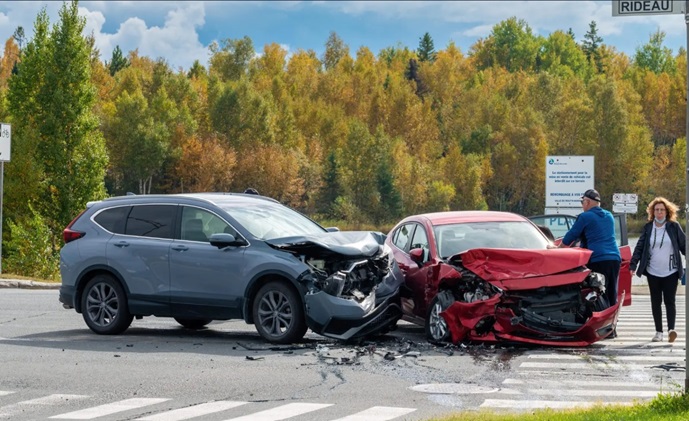
A catastrophic automobile accident may lead to injury, vehicle damage, medical bills, and significant interruption to your daily life. These issues may get considerably more problematic when the participating drivers differ on who caused the crash. Instead of a straightforward procedure through the insurance system, the claim may become a complex inquiry in which evidence, witness statements, and alternative theories are meticulously evaluated.
Fault issues are especially essential since blame may determine whether or not an injured person is compensated and how much may eventually be available. Understanding what occurs throughout this process might assist accident victims avoid making actions that may inadvertently undermine their position.
Why Fault Becomes Contested
Often, drivers recall an accident differently. One motorist will feel the other vehicle changed lanes without notice, while the other driver will say there was adequate room to do the maneuver safely. Disagreement as to whether a vehicle was at an intersection, or making a left turn, or rear-ending someone, or in a multi-car accident might be the same.
Sometimes the argument is not only between the drivers. The insurer may have doubts as to whether the policyholder was at fault, since if it accepts blame it may have to pay a large claim. Serious incidents with major casualties and costly property damage could be very closely scrutinized.
Weather, low visibility, complicated road layouts, and inadequate information might make it even more difficult to work out liability.
The Accident Investigation Gains Importance
In the event of evident fault, an insurance claim might depend on simple accident paperwork. However, a far wider inquiry may be needed when accountability is disputed.
Photographs of the cars might show the point and angle of collision. Pictures of skid marks, debris, broken barriers, traffic signs, and the surrounding roads might potentially provide significant information as to what occurred.
Police reports might be another source of information. Officers may take testimonies of drivers and bystanders, apparent traffic offenses, road conditions, and other observations of the incident. The contents of a police report may be helpful in an inquiry but may not necessarily decide the result of a legal lawsuit.
If the incident is severe or complex, an injured individual may choose to see a car accident attorney who may assist them in determining what evidence may be significant and how liability may be determined under relevant legislation.
The Testimony Of Witnesses Can Change The Picture
Independent witnesses may be especially helpful when there are two drivers with opposing stories. Anyone who saw the crash from a nearby car, sidewalk, shop, or apartment may be able to recount what transpired just before the hit.
In general, witness statements are more valuable if they are obtained immediately after an accident. Memories fade, contact information changes, people ultimately forget the tiny stuff.
Statements may also be tested against tangible evidence. For example, a witness may recall seeing one car traveling at speed, whereas video or physical evidence may offer context. Most investigators will take the whole of the evidence and not only base their findings on one person’s story.
Video, Digital Evidence Could Provide Answers
Digital information has a growing role in modern accident investigations. Dashcam video may occasionally reveal lane changes, traffic lights, vehicle movements or moments leading up to an accident.
Local businesses, houses, parking and traffic-monitoring systems may also contain cameras that recorded relevant material. However, not all recordings are kept permanently. Some systems will automatically overwrite earlier video, which means potentially vital evidence might be lost if not discovered soon.
Other types of information might be important too, depending on circumstances. Investigators may use vehicle data, images with timestamps, phone records and technological information linked to particular cars to build a more precise chronology.
Insurance Companies Review Themselves
When blame is contested, insurance firms will usually conduct an investigation. They then either accept or reject liability. Adjusters may look into photos, repair estimates, medical records, statements from drivers, police reports, and witness testimony.
At this step, an injured individual may be asked to provide more information or make a recorded statement. Questions that seem normal might be quite specific about what the driver was doing just before the crash.
It is crucial to provide precise information, but accident victims should not try to fill in the blanks with things they do not vividly recall. Speculation as to speed, distance, time, or the behavior of another motorist creates discrepancies that subsequently form part of the dispute.
More Than One Driver Might Be Held Responsible
Not every collision involves a driver who is all to blame and a driver who is blameless. Evidence indicates that in some instances two or more persons were involved in the crash.
One motorist may have turned in incorrectly, and the other was traveling too fast for the circumstances. Similarly, if a motorist failed to yield, that driver may share liability with a distracted driver who could have responded sooner.
The legal ramifications of joint liability are determined by the legislation relevant to the situation. This may directly affect compensation; thus, it is very vital to determine what each side did.
May Require Accident Reconstruction
Severe crashes are sometimes complex, including issues of speed, braking, vehicle motion, visibility, and impact forces. When the conventional evidence does not clearly indicate what happened, accident reconstruction professionals may be engaged.
They may review physical damage, highway evidence, vehicle locations, pictures, measurements, and other information available. Their study may assist in explaining the chain of events that led to the catastrophe.
Reconstruction is especially helpful in multi-vehicle crashes or when the drivers’ stories are radically different.
Settlement Talks Might Get More Difficult
Disputes over who is responsible have a way of making settlement talks slower and more difficult. An insurance company may outright reject culpability, or claim that the wounded individual was mostly responsible for the collision.
This is why documentation is so crucial. Medical data may prove the kind of injuries, job records can prove lost revenue, and repair records can prove property damage. At the same time, proof of accident speaks to the different but equally crucial topic of culpability.
These things are usually closely connected in a strong claim, rather than being separate concerns.
Fighting For Your Rights After A Contested Accident
The immediate aftermath of a catastrophic vehicle accident might have long-lasting implications if it is not evident who is to blame for the accident. Photographs, medical records, identification of witnesses, and retention of copies of papers connected to the event may assist in establishing a good record of what happened.
And it is vital to withhold blame until all the evidence available has been carefully examined. What seems to be a simple collision may become considerably more convoluted when witness testimony, camera records, car data and highway evidence are included.
At the end of the day, a contested fault claim is an issue of proof. The more thorough and clear the evidence gets, the simpler it is to recreate the accident and to pinpoint the cause.