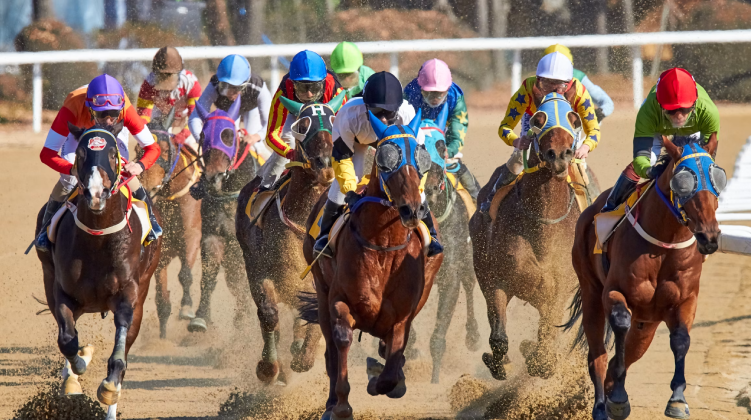
In May 2009, Mine That Bird went off at 50–1 in the Kentucky Derby despite a form line that read like a warning sign – three straight losses, a barren stretch on synthetic tracks, a jockey switch nobody had priced in. The gap at the wire stretched past six lengths, a margin bettors that year had priced at essentially zero chance. Nobody’s spreadsheet saw that coming, and that is precisely the point: a derby field compresses three-year-olds who have run maybe six to eight races total, so “form” here means a thinner sample than almost any other race on the calendar.
That thinness is why sharp bettors treat the morning line as a starting point, not a verdict. A trainer who quietly worked a colt five furlongs in under 59 seconds two weeks out tells you more than four mediocre finishes at a smaller track. Some accounts tracking these moves on x3bet flagged a similar drift last spring, where a horse drifted from 12–1 to 7–1 in the final forty-eight hours purely on workout chatter, with no new race result to justify it.
Why Form Guides Miss the Full Picture
A past-performance line answers “what happened” but rarely “why.” A colt beaten eight lengths might have been squeezed at the rail, forced wide on the turn, or simply outrun on a track that favored speed that particular afternoon. Strip the trip note away and the raw finishing position looks damning; read the chart carefully and the same race can look like a near-miss. Handicappers who skip the trip notes are handicapping blind.
Track Bias and Surface Changes
Churchill Downs dirt in wet conditions behaves nothing like the fast, dry surface most three-year-olds trained on that winter. A colt bred for speed on a firm track can labor in mud, while a plodder who never got a fair shake elsewhere suddenly runs the race of his life. The table below shows how three recent Derby winners compared against their pre-race odds and their most recent form line.
| Year | Winner | Pre-race odds | Prior start result |
| 2009 | Mine That Bird | 50–1 | 3 losses in a row |
| 2019 | Country House | 65–1 | 4th, beaten 6 lengths |
| 2021 | Medina Spirit | 12–1 | 2nd, undefeated streak broken |
Two of the three had recent form that pointed nowhere near a win. The market’s own memory of “last time out” simply carried less weight than track conditions and pace on the day.
Pace Scenarios the Numbers Don’t Show
A twenty-horse Derby field almost guarantees a hot, contested pace among the front-runners, which sets up closers that no form line captures directly. A horse who ran last in his previous three starts might simply have been sitting behind a slow pace with nowhere to make a move – put him in a fast-pace scenario and the running style suddenly fits. Pace projection is arguably the single most underused tool against raw form reading.
Jockeys know this better than bettors do. A rider who has walked the paddock and felt the pack’s nervous energy before the gate often adjusts a plan mid-race in ways no data table predicts. That instinct, multiplied across twenty horses fighting for position in the first quarter-mile, is exactly why pace charts built from previous races routinely miss what actually happens on Derby day.
Trainer and Barn Intent Signals
Barn chatter, workout times, and equipment changes – blinkers on for the first time, a switch to a lighter set of shoes – often say more than four bad finishes. Trainers rarely spend real money entering a horse they believe has no shot, and a quiet drop in workout time two weeks before the race is a stronger signal than most public form ratings.
Reading Between the Lines of a Derby Line
None of this means form is worthless – it means treating it as one input among several, weighted against surface, pace, and barn behavior. A horse with poor recent results but a favorable pace matchup and a hot workout tab deserves a second look before being crossed off a ticket. The public bets memory; sharper money bets a projected race shape.
The lesson from Mine That Bird, Country House, and even lower-priced surprises is not that form doesn’t matter – it is that the derby distance, field size, and thin sample size make it a weaker predictor than in almost any other race on the racing calendar. Treat the line as a question, not an answer, and the next longshot upset will look a lot less random in hindsight.