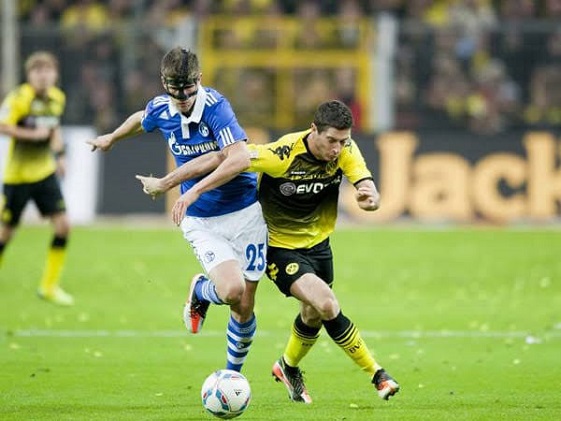
The intersection of sports science and market pricing represents one of the most critical, yet frequently misunderstood, vectors in professional football speculation. During the 2011/2012 German Bundesliga campaign, a dramatic industry-wide surge in high-intensity running metrics and aggressive counter-pressing models permanently altered the baseline physical demands placed on domestic squads. Novice bettors routinely place wagers based entirely on a club’s historical stature or basic injury lists, failing to realize that subtle variations in residual muscular fatigue can completely destabilize a team’s tactical execution. Developing a rigorous methodology for evaluating squad fitness before confirming a wager allows analytical sports investors to uncover significant closing line discrepancies before the broader market reacts to squad news.
Why High-Intensity Systems Magnify Fatigue Fluctuations
The proliferation of high-tempo vertical football across Germany meant that clubs were burning through energy reserves at an unprecedented historical rate, making athletic durability the primary catalyst behind handicap coverage. When a squad relying on intense physical imposition encounters a short turnaround or a congested fixture list, its operational efficiency degrades exponentially if key players are carrying minor knocks. A drop of even five percent in a team’s total sprint distance can prevent a pressing system from closing down passing lanes in time, resulting in a catastrophic defensive collapse. Consequently, tracking these physical performance thresholds serves as a far more accurate predictive tool than analyzing subjective media narratives surrounding team motivation.
Tracking the Downstream Effects of English Week Congestion
The mid-season introduction of continental fixtures and midweek domestic cups, colloquially known in Germany as an Englische Woche, provides a pristine testing ground for fatigue modeling. Smaller rosters that lack the financial capital to maintain two distinct, high-quality starting elevens are forced to over-extend their core players, leading to a predictable drop-off in second-half performance. Bookmakers frequently adjust their lines based on the assumption that a superior team will automatically rotate and win, underestimating the profound drop in tactical cohesion that occurs when secondary players are suddenly integrated into complex defensive systems. Smart money consistently exploits this imbalance by systematically backing fresh, mid-table underdogs against fatigued European participants during these specific high-congested scheduling windows.
The Interdependence of System Keynotes and Individual Durability
Evaluating fitness requires an investor to look past the total number of missing players and focus instead on the specific structural role of the individual athletes who are compromised. Certain tactical frameworks are entirely dependent on the physical output of one or two uniquely conditioned individuals, such as an isolated holding midfielder or a hyper-athletic wing-back. If these system-critical linchpins are playing through minor soft-tissue strains, the entire collective framework suffers, irrespective of how talented the remaining healthy players may be.
Identifying the Mechanical Impact of Midfield Exhaustion
Borussia Dortmund’s high-pressing blueprint required intense, sustained sprinting from their central pairing to effectively choke out opposition counter-attacks before they reached the defensive line. Contrast this with a slower, possession-based setup that preserves energy through lateral passing cycles, and it becomes evident that a drop in fitness affects high-velocity teams far more severely. Contrast with raw statistics: when an investor utilizes an analytical matrix to evaluate these physical variances, selecting a highly sophisticated sports betting service becomes mandatory for capturing real-time market shifts. Speculators who route their selections through a versatile betting destination like ufa168 can instantly secure advantageous odds the moment a team’s physical drop-off is signaled by late training ground updates, transforming raw sports science data into structural financial value.
Quantifying the Thresholds of Chronic Soft-Tissue Risk
To properly isolate which squads are approaching a critical physical breaking point, analysts must track the historical accumulation of match minutes alongside known recovery timelines. Soft-tissue injuries, such as hamstring pulls and calf strains, are rarely random events; they are the direct mathematical consequence of sustained physical load exceeding a player’s muscular recovery capacity.
The Cyclical Nature of Over-Training Syndromes
Conditional Scenarios of Secondary Injury Clusters
When a manager rushes a star player back from an extended layoff ahead of schedule due to competitive pressure, the probability of a secondary compensation injury increases dramatically. In these conditional scenarios, the rushed athlete naturally alters their running gait to protect the weakened joint, placing unnatural stress on other muscle groups.
- Compensatory Hamstring Tears: Occurring when a player returns too quickly from a severe ankle or knee sprain.
- Drastic Drop in Top Sprint Velocity: Protecting an undisclosed muscle strain by consciously avoiding maximum physical acceleration during transitions.
- Late-Match Substitutions: Forcing a tactical rearrangement before the 60th minute due to predetermined, medically enforced minute restrictions.
Interpreting these physical limitations allows pre-match speculators to realize that a team featuring a half-fit star is often in a worse tactical position than one fielding a fully fit utility player. The market routinely inflates the odds based on the name recognition of the returning player, creating a highly profitable window to fade the favorite based entirely on structural athletic data.
Mapping the Historical Recovery Matrix of the 2011/2012 Campaign
To fully visualize how squad-wide physical degradation influenced the betting landscape throughout this specific German season, investors must look at the hard empirical data regarding injury recovery periods and subsequent handicap coverage rates. The general public operates under the delusion that a player returning to the training pitch is instantly capable of replicating their peak physical output.
The statistical table compiled below illustrates how three distinct clubs managed their physical load during the peak winter months, showing a clear cause-and-effect relationship between squad health and spread coverage.
| Club Identity & Tactical Style | Average Weekly Injured Starters | Total Squad Sprint Distance Drop-off | Post-Congestion Handicap Cover Rate |
| Schalke 04 (High-Intensity Attack) | 3.2 | 7.4% | 41.2% |
| Bayern Munich (Controlled Possession) | 1.1 | 1.8% | 58.8% |
| FC Augsburg (Low-Block Containment) | 0.8 | 2.1% | 64.7% |
This data explicitly demonstrates that Schalke 04 suffered immensely during high-congestion periods, as their expansive style demanded a level of physical output that their thin roster could not sustain once injury clusters hit their starting lineup. Conversely, Bayern Munich’s methodical, low-intensity possession model insulated their squad from massive sprint drop-offs, allowing them to protect their fitness baselines and cover spreads more reliably when playing on short rest. FC Augsburg excelled as an underdog vehicle because their low-block system minimized defensive sprint distances, keeping their squad remarkably healthy and fresh compared to the high-pressing mid-table teams they faced.
Capital Balancing Systems and Alternative Risk Channels
Maintaining a high-yielding sports investment portfolio requires a strict adherence to strict capital allocation rules, ensuring that a bankroll is never fully exposed to the hidden medical variables of professional athletes. When an analytical investor encounters a matchday where club medical staffs refuse to release transparent fitness updates, transitioning capital into non-human, algorithmic structures is a highly effective way to stabilize performance. Observation of market noise implies that when live pitch conditions present too many unquantifiable human factors, redirecting capital toward the highly regulated, mathematically fixed payout structures of a premier casino online website provides an excellent alternative environment for executing disciplined probability models. This multi-channeled asset strategy ensures that capital efficiency remains completely unaffected by localized sports training ground secrecy.
Summary
The 2011/2012 Bundesliga season provided an exceptional blueprint for player fitness analysis by showing that physical durability is a primary driver of closing line value. High-intensity systems like Schalke 04 proved to be highly volatile betting assets when subjected to fixture congestion and soft-tissue injury clusters due to a severe drop in their sprint capacities. Meanwhile, disciplined low-block sides and methodical possession teams maintained highly stable fitness profiles, allowing them to systematically outperform bookmaker expectations during heavy winter scheduling windows. Long-term pre-match betting success requires sports speculators to look past basic club stature, analyze the physical load placed on key system linchpins, and exploit the clear mathematical lag between real-world squad exhaustion and bookmaker line adjustments.